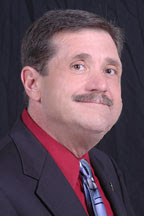
The 2010 Legislative Session ended March 13th at the stroke of midnight. By some standards this was a slow session, however my duties kept me busy throughout the session from morning to night.
Early on in the session I was assigned the task of addressing the high drop-out rate of our children and helping them to continue their education.
I worked hard for the passage of HB-4177, which would direct an additional 5% of the existing severance tax back to the counties of origin.
On behalf of the small mineral owners in the state, I worked to clarify legislation that would assure all owners of marcellus shale gas reservoirs would be entitled to royalties upon the expoitation of this valuable resource, SB-369.
For the purposes of this article, I am going to concentrate on HB-4177 and SB-369. I will follow shortly with an article devoted to the drop-out situation.
HB-4177, five percent of the tax attributable to the severance of coal will be for the use and benefit of the counties from which those taxes were generated and for the stated purposes of economic development and redevelopment authoritities, infrastructure (water and sewer, etc.), job creation, roads and bridges, and my amendment added public health care delivery including the dedication of funds to bond indebtedness. An example use that my amendment allows would be to dedicate a portion of these funds for the construction of a new hospital in Webster County, a 24 hour emergency care facility in Richwood, Nicholas County or in Clay County, Montgomery General Hospital and New River Health clinic in Fayette counties, funding for ambulances, or public health departments.
The return of the tax to counties from the state general revenue fund will be phased in over 5 year with 1% additional beginning with July 1, 2010. Additionally, severance tax generated from oil and gas exploitation will likewise be returned to the county of origin. Webster, Nicholas, and Clay counties can expect when fully implimented an additional $400,000 a year for the purposes previously mentioned. Fayette County can expect upwards of $500,000 and Upshur around $150,000. These funds will drastically improve each county's ability to improve its overall economic development over the years, without raising any taxes.
My understanding of SB-369 would allow the marcellus shale gas reservoirs to potentially be defined as a deep-well, not unlike how oil reserves are defined. Without a clarifying definition to state it would be treated as a shallow well, the point of the well head and then drilled horizontally as much as 5,000 (almost a mile), the owner of the land where the well head would receive all the royalty. Effectively allowing neighbors often times, large out of state companies to take the gas off of the adjoining property without compensating them. I had hoped to offer a clarifying amendment, but was rebuffed. I ultimately alerted my colleagues in the House of Delegates of the potential problem and they rejected the legislation. Score one for the little guy.
Thursday, March 18, 2010


Saturday, January 16, 2010
2010 The Legislative Session Begins
Walking through the halls of the Legislature this past Wednesday, I couldn’t help but smile. My eagerness to make the changes that will benefit both our community and state always puts me in a cheerful mood. Looking ahead, I am happy to be supporting legislation that will ensure that the great state of West Virginia meets its full potential in the years to come.
One of my focuses this session will be judicial reform, as it has been in the past. Last year, I co-sponsored Senate Bill 263, which discloses certain inmates’ personal communication, and Senate Bill 341, which transferred the Juvenile Justice Database Administration to the Supreme Court. I was also the sole sponsor for Senate Bill 99, which allowed sentencing discretion for youthful offenders.
This session, I will be at the forefront of other judicial reforms, such as Senate Bill 195, which will relieve judges from partisan campaign donations that could potentially damage judges’ credibility as a non-partisan source. This bill is in line with recommendations from Sandra Day O’Connor, former U.S. Supreme Court Justice.
As Senate Chairman of the Regional Jail and Correctional Facility Authority Interim Committee, I have studied the growing problem of prison overpopulation as well as potential solutions. In response to the findings, I am co-sponsoring Senate Bill 207, which would streamline the parole process for non-violent criminals and those who have not committed crimes against children.
My other main focus will be on this great state’s education system. I fully support a higher education tuition freeze. This action is necessary in order to make sure parents can continue sending their children to college. However, this must be structured as to not delay a more dramatic increase in the future while not diminishing the quality of post secondary education. Being a father myself, I will do everything I can to protect post secondary education.
Once again, I am looking forward to a productive and successful new session.
You can contact me via email randy.white@wvsenate.gov or phone: 304-357-7906 or by writing Senator Randy White, Building 1, Room 204-W, 1900 Kanawha Blvd., East, Charleston, WV 25305.
One of my focuses this session will be judicial reform, as it has been in the past. Last year, I co-sponsored Senate Bill 263, which discloses certain inmates’ personal communication, and Senate Bill 341, which transferred the Juvenile Justice Database Administration to the Supreme Court. I was also the sole sponsor for Senate Bill 99, which allowed sentencing discretion for youthful offenders.
This session, I will be at the forefront of other judicial reforms, such as Senate Bill 195, which will relieve judges from partisan campaign donations that could potentially damage judges’ credibility as a non-partisan source. This bill is in line with recommendations from Sandra Day O’Connor, former U.S. Supreme Court Justice.
As Senate Chairman of the Regional Jail and Correctional Facility Authority Interim Committee, I have studied the growing problem of prison overpopulation as well as potential solutions. In response to the findings, I am co-sponsoring Senate Bill 207, which would streamline the parole process for non-violent criminals and those who have not committed crimes against children.
My other main focus will be on this great state’s education system. I fully support a higher education tuition freeze. This action is necessary in order to make sure parents can continue sending their children to college. However, this must be structured as to not delay a more dramatic increase in the future while not diminishing the quality of post secondary education. Being a father myself, I will do everything I can to protect post secondary education.
Once again, I am looking forward to a productive and successful new session.
You can contact me via email randy.white@wvsenate.gov or phone: 304-357-7906 or by writing Senator Randy White, Building 1, Room 204-W, 1900 Kanawha Blvd., East, Charleston, WV 25305.
Saturday, December 5, 2009
Substance Abuse, A $1.8 Billion WV Problem
Substance abuse is arguably the most pervasive problem facing West Virginia and the nation. In West Virginia, substance abuse problems cost us more than $ 1.8 billion in direct and indirect costs in 2006 alone. Addressing substance abuse is therefore a crucial issue for West Virginia and its communities.
According to our governor, Joe Manchin, "West Virginia is a wonderful place to live and work". "Unfortunately, we are not immune from the problem of substance abuse. We are experiencing alarming trends in prescription drug abuse, the use of illicit substances, and under-age drinking and tobacco use. These problems affect us all and stand as a barrier to our state reaching its full potential, rob us of our financial capital, and leave behind a wake of human suffering and personal tragedy".
More than $ 116 million each year consumes West Virginia's health care system budget addressing drug and alcohol related diseases. Substance abuse consumes more than $330 million of WV's criminal justice system involving drug and alcohol related offenses.
Our state's prison overpopulation will require us to build a new prison at over $200 million to house more persons convicted of crimes relating to substance abuse. More prisons will need to be built in the future if something isn't done. we can choose to either become "smart on crime" through addressing the social problems of substance abuse or we can continue with the old way of "tough on crime" and lock more people up without dealing with the underlying problems of abuse and addiction.
West Virginia spends $6 million each year on drug and alcohol rehabilitation to solve a $1.8 billion substance abuse problem. We've definitely got to do a better job and provide more resources through "tried and true" efforts of addressing substance abuse. Our state and its children should expect nothing less. We can't afford any longer to treat only the symptoms of substance abuse, but we must treat the "disease" of abuse and addiction.
Learn more at:
West Virginia Prevention Resource Center
100 Angus E. Peyton Drive
South Charleston, WV 25303
Phone 304.766.6301
http://www.prevnet.org/
Fayette County Substance Abuse Task Force
A year-long planning effort has been undertaken calling on the resources and creativity of a broad cross-section of county and community leaders throughout Fayette County. Against the backdrop of some of West Virginia's beautiful parks and wildlife areas and the New River Gorge National Park is a serious and complex problem..drug abuse.
* In Fayette and Raleigh Counties, the Department of Health and Human Resources reports that substance abuse by a parent was in 2005-2006, a factor 30% of the time when a child was removed from the home. Today, the Fayette County DHHR, Child Protective Services reports substance abuse is the cause 99% of the time
* According to the Women's Resource Center serving Fayette County, 85% of reported domestic violence incidents involve substance abuse of some kind.
* Businesses report it is often difficult finding employees who can successfully pass a drug screening before they are hired.
* Companies want to locate in areas where their workers can feel safe and enjoy a sense of well-being. Many in Fayette County are concerned that drug abuse could stand in the way of attracting more jobs in the area.
These are not criticisms of Fayette County, but a critique which identifies a problem. The Fayette County Substance Abuse Task Force has taken the challenge of addressing substance abuse through a county-wide forum in hopes of answering the following?
* How can we promote healthy living?
* How can we provide treatment and support recovery?
* How can we support enforcement of laws and regulations?
The forum has been the beginning of this important conversation. They hope it leads to further discusssions involving wider circles of people who care about the issue and are willing to work together. They are leaders in the State of West Virginia as they address a problem that is in every single town, hollow, county, school, and segment of our society.
You can get further information and you can become involved by contacting:
Fayette County Family Resource Network
Aletha Stolar, Director
P.O. Box 307
Fayetteville,WV 25840-0307
Phone: 304-574-4338
Email: fayettefrn@gmail.com
http://www.fayettefrn.com/
According to our governor, Joe Manchin, "West Virginia is a wonderful place to live and work". "Unfortunately, we are not immune from the problem of substance abuse. We are experiencing alarming trends in prescription drug abuse, the use of illicit substances, and under-age drinking and tobacco use. These problems affect us all and stand as a barrier to our state reaching its full potential, rob us of our financial capital, and leave behind a wake of human suffering and personal tragedy".
More than $ 116 million each year consumes West Virginia's health care system budget addressing drug and alcohol related diseases. Substance abuse consumes more than $330 million of WV's criminal justice system involving drug and alcohol related offenses.
Our state's prison overpopulation will require us to build a new prison at over $200 million to house more persons convicted of crimes relating to substance abuse. More prisons will need to be built in the future if something isn't done. we can choose to either become "smart on crime" through addressing the social problems of substance abuse or we can continue with the old way of "tough on crime" and lock more people up without dealing with the underlying problems of abuse and addiction.
West Virginia spends $6 million each year on drug and alcohol rehabilitation to solve a $1.8 billion substance abuse problem. We've definitely got to do a better job and provide more resources through "tried and true" efforts of addressing substance abuse. Our state and its children should expect nothing less. We can't afford any longer to treat only the symptoms of substance abuse, but we must treat the "disease" of abuse and addiction.
Learn more at:
West Virginia Prevention Resource Center
100 Angus E. Peyton Drive
South Charleston, WV 25303
Phone 304.766.6301
http://www.prevnet.org/
Fayette County Substance Abuse Task Force
A year-long planning effort has been undertaken calling on the resources and creativity of a broad cross-section of county and community leaders throughout Fayette County. Against the backdrop of some of West Virginia's beautiful parks and wildlife areas and the New River Gorge National Park is a serious and complex problem..drug abuse.
* In Fayette and Raleigh Counties, the Department of Health and Human Resources reports that substance abuse by a parent was in 2005-2006, a factor 30% of the time when a child was removed from the home. Today, the Fayette County DHHR, Child Protective Services reports substance abuse is the cause 99% of the time
* According to the Women's Resource Center serving Fayette County, 85% of reported domestic violence incidents involve substance abuse of some kind.
* Businesses report it is often difficult finding employees who can successfully pass a drug screening before they are hired.
* Companies want to locate in areas where their workers can feel safe and enjoy a sense of well-being. Many in Fayette County are concerned that drug abuse could stand in the way of attracting more jobs in the area.
These are not criticisms of Fayette County, but a critique which identifies a problem. The Fayette County Substance Abuse Task Force has taken the challenge of addressing substance abuse through a county-wide forum in hopes of answering the following?
* How can we promote healthy living?
* How can we provide treatment and support recovery?
* How can we support enforcement of laws and regulations?
The forum has been the beginning of this important conversation. They hope it leads to further discusssions involving wider circles of people who care about the issue and are willing to work together. They are leaders in the State of West Virginia as they address a problem that is in every single town, hollow, county, school, and segment of our society.
You can get further information and you can become involved by contacting:
Fayette County Family Resource Network
Aletha Stolar, Director
P.O. Box 307
Fayetteville,WV 25840-0307
Phone: 304-574-4338
Email: fayettefrn@gmail.com
http://www.fayettefrn.com/
Wednesday, November 25, 2009
Congratulations Richwood High School
Congratulations Richwood High School for an oustanding year of football! Great job Coach Rogers, your staff and fine young men. Additional congratulations to Dustin Brown the Army Iron Man of the Year for 2009.
These links will take you to information regarding interim meetings held over the summer. October's http://docs.google.com/gview?a=v&pid=gmail&attid=0.1.1&thid=124a0d9e93bfe1f5&mt=application%2Fpdf&url=http%3A%2F%2Fmail.google.com%2Fmail%2F%3Fui%3D2%26ik%3D9ec3ff1dc9%26view%3Datt%26th%3D124a0d9e93bfe1f5%26attid%3D0.1.1%26disp%3Dattd%26zw&sig=AHIEtbSMNdaGVAMN65zE3Tg2FSfecpoBzA and September's http://docs.google.com/gview?a=v&pid=gmail&attid=0.1.1&thid=1242fa7b4bafaaeb&mt=application%2Fpdf&url=http%3A%2F%2Fmail.google.com%2Fmail%2F%3Fui%3D2%26ik%3D9ec3ff1dc9%26view%3Datt%26th%3D1242fa7b4bafaaeb%26attid%3D0.1.1%26disp%3Dattd%26zw&sig=AHIEtbQiMj_WRTH0B2ixMgGkKuSAWq8H8g
These links will take you to information regarding interim meetings held over the summer. October's http://docs.google.com/gview?a=v&pid=gmail&attid=0.1.1&thid=124a0d9e93bfe1f5&mt=application%2Fpdf&url=http%3A%2F%2Fmail.google.com%2Fmail%2F%3Fui%3D2%26ik%3D9ec3ff1dc9%26view%3Datt%26th%3D124a0d9e93bfe1f5%26attid%3D0.1.1%26disp%3Dattd%26zw&sig=AHIEtbSMNdaGVAMN65zE3Tg2FSfecpoBzA and September's http://docs.google.com/gview?a=v&pid=gmail&attid=0.1.1&thid=1242fa7b4bafaaeb&mt=application%2Fpdf&url=http%3A%2F%2Fmail.google.com%2Fmail%2F%3Fui%3D2%26ik%3D9ec3ff1dc9%26view%3Datt%26th%3D1242fa7b4bafaaeb%26attid%3D0.1.1%26disp%3Dattd%26zw&sig=AHIEtbQiMj_WRTH0B2ixMgGkKuSAWq8H8g
Tuesday, October 27, 2009
Yes or no? Health insurance reform for 44 million Americans.
Please click here and learn more about what is at stake in Health Care Reform http://my.barackobama.com/hrvcrating?v=tywtj0ZkdfA . I'm a small business owner with insurance, but I also care for those who don't have health insurance....would you do the following? Please click here http://my.barackobama.com/hrvcrating?v=1pM90A1c2a8 .
Friday, August 14, 2009
Seven Falsehoods About Health Care Reform
So much for a slow news month. August feels like campaign season, with claims on health care coming at us daily. Does the House bill call for mandatory counseling on how to end seniors' lives sooner? Absolutely not. Will the government be dictating to doctors how to treat their patients? No. Do the bills propose cutting Medicare benefit levels? No on that one, too.
But on the other hand, has Congress figured out how to pay for this overhaul? Not yet. Or will it really save families $2,500 a year as the president keeps claiming? Good luck on that one, too. You can go to www.fastcheck.org and find out the facts.
FALSE: The government will dictate what kind of care I receive. The Federal Coordinating Council for Comparative Effectiveness Research is charged with supporting and coordinating research that the government has been funding for years into which treatments work best, and in some cases, are most cost-effective. Supporters of this type of research say it can provide valuable information to doctors, improving care and also lowering cost.
False: Private Insurance Will Be Illegal. In July, Investor's Business Daily published an editorial in which it claimed that H.R. 3200 would make private insurance illegal. But IBD was mistaken. It was citing the part of the bill that ensures people with individually purchased coverage don't have to give up that coverage unless they want to.
False: The House Bill Requires Suicide Counseling. This claim is nonsense. In an appearance on former Sen. Fred Thompson's radio show, Betsy McCaughey, a former Republican Lieutenant Governor also enthusiastically pushed the bogus claim that the House bill will require seniors to have regular counseling sessions on how to end their lives: This is a misrepresentation. What the bill actually provides for is voluntary Medicare-funded end-of-life counseling. In other words, if seniors choose to make advance decisions about the type of care and treatments they wish to receive at the end of their lives, Medicare will pay for them to sit down with their doctor and discuss their preferences. There is no requirement to attend regular sessions, and there is absolutely no provision encouraging euthanasia.
Of course, seniors who talk to their doctors about end-of-life care might well choose to discuss what types of life-saving treatment they wish to refuse. That choice has been federally guaranteed for almost 20 years. Euthanasia, on the other hand, is legal in only three states, making it even more unlikely to be a major part of the federal health plan.
False: Families Will Save $2,500 . Proponents speak constantly of holding down rising medical costs. As recently as May 13, the president said legislation plus some voluntary measures by the private sector "could save families $2,500 in the coming years – $2,500 per family," echoing a claim he made countless times on the campaign trail last year. For one thing, Obama isn't actually promising to reduce health care spending below current levels, only to cut the rate of growth in spending. And even that is proving to be far tougher to accomplish than Obama led voters to believe.
False: The Bill Is Paid For. At least, it isn't paid for yet. President Obama has repeatedly said that a health care overhaul "will be paid for" and that he won't sign a bill that isn't deficit-neutral. But neither the House bill nor the Senate HELP Committee bill meets that criteria. According to the nonpartisan Congressional Budget Office and Joint Committee on Taxation, the House bill as introduced would add a net $23 billion to the deficit each year while the HELP Committee bill racks up more, $59.7 billion a year. But considering in the TARP bailout from President Bush, that's peanuts: AIG received over $65 billion in one year, and the likes of Citigroup, Goldman Sachs, et. al. received over $800 billion.
False: Medicare Benefits Will Be Slashed. The claim that Obama and Congress are cutting seniors' Medicare benefits to pay for the health care overhaul is outright false, though that doesn't keep it from being repeated ad infinitum. The truth is that the pending House bill extracts $500 billion from projected Medicare spending over 10 years, as scored by the Congressional Budget Office, by doing such things as trimming projected increases in the program's payments for medical services, not including physicians. Increases in other areas, such as payments to doctors, bring the net savings down to less than half that amount. But none of the predicted savings – or cuts, depending on one's perspective – come from reducing current or future benefits for seniors. President Obama has promised repeatedly that benefit levels won't be reduced. AARP: Fact: None of the health care reform proposals being considered by Congress would cut Medicare benefits or increase your out-of-pocket costs for Medicare services.
False: Illegal Immigrants Will Be Covered. One Republican congressman issued a press release claiming that "5,600,000 Illegal Aliens May Be Covered Under Obamacare," and we've been peppered with queries about similar claims. They're not true. In fact, the House bill (the only bill to be formally introduced in its entirety) specifically says that no federal money would be spent on giving illegal immigrants health coverage.
I certainly hope this is helpful. This issue is too important to not know the facts, regardless which way you are presently leaning in this debate. Personally, I think America needs Health Care Reform. It is too soon to know what Congress will have as its final product for us to rationally make a decision. Currently, there are three seperate bills in Congress dealing with this issue and many, many, changes will be forthcoming before the final bill is ready.
Please don't be swayed by lies, propaganda and the likes, but keep an open mind. This is too important for us, our country, and our children.
But on the other hand, has Congress figured out how to pay for this overhaul? Not yet. Or will it really save families $2,500 a year as the president keeps claiming? Good luck on that one, too. You can go to www.fastcheck.org and find out the facts.
FALSE: The government will dictate what kind of care I receive. The Federal Coordinating Council for Comparative Effectiveness Research is charged with supporting and coordinating research that the government has been funding for years into which treatments work best, and in some cases, are most cost-effective. Supporters of this type of research say it can provide valuable information to doctors, improving care and also lowering cost.
False: Private Insurance Will Be Illegal. In July, Investor's Business Daily published an editorial in which it claimed that H.R. 3200 would make private insurance illegal. But IBD was mistaken. It was citing the part of the bill that ensures people with individually purchased coverage don't have to give up that coverage unless they want to.
False: The House Bill Requires Suicide Counseling. This claim is nonsense. In an appearance on former Sen. Fred Thompson's radio show, Betsy McCaughey, a former Republican Lieutenant Governor also enthusiastically pushed the bogus claim that the House bill will require seniors to have regular counseling sessions on how to end their lives: This is a misrepresentation. What the bill actually provides for is voluntary Medicare-funded end-of-life counseling. In other words, if seniors choose to make advance decisions about the type of care and treatments they wish to receive at the end of their lives, Medicare will pay for them to sit down with their doctor and discuss their preferences. There is no requirement to attend regular sessions, and there is absolutely no provision encouraging euthanasia.
Of course, seniors who talk to their doctors about end-of-life care might well choose to discuss what types of life-saving treatment they wish to refuse. That choice has been federally guaranteed for almost 20 years. Euthanasia, on the other hand, is legal in only three states, making it even more unlikely to be a major part of the federal health plan.
False: Families Will Save $2,500 . Proponents speak constantly of holding down rising medical costs. As recently as May 13, the president said legislation plus some voluntary measures by the private sector "could save families $2,500 in the coming years – $2,500 per family," echoing a claim he made countless times on the campaign trail last year. For one thing, Obama isn't actually promising to reduce health care spending below current levels, only to cut the rate of growth in spending. And even that is proving to be far tougher to accomplish than Obama led voters to believe.
False: The Bill Is Paid For. At least, it isn't paid for yet. President Obama has repeatedly said that a health care overhaul "will be paid for" and that he won't sign a bill that isn't deficit-neutral. But neither the House bill nor the Senate HELP Committee bill meets that criteria. According to the nonpartisan Congressional Budget Office and Joint Committee on Taxation, the House bill as introduced would add a net $23 billion to the deficit each year while the HELP Committee bill racks up more, $59.7 billion a year. But considering in the TARP bailout from President Bush, that's peanuts: AIG received over $65 billion in one year, and the likes of Citigroup, Goldman Sachs, et. al. received over $800 billion.
False: Medicare Benefits Will Be Slashed. The claim that Obama and Congress are cutting seniors' Medicare benefits to pay for the health care overhaul is outright false, though that doesn't keep it from being repeated ad infinitum. The truth is that the pending House bill extracts $500 billion from projected Medicare spending over 10 years, as scored by the Congressional Budget Office, by doing such things as trimming projected increases in the program's payments for medical services, not including physicians. Increases in other areas, such as payments to doctors, bring the net savings down to less than half that amount. But none of the predicted savings – or cuts, depending on one's perspective – come from reducing current or future benefits for seniors. President Obama has promised repeatedly that benefit levels won't be reduced. AARP: Fact: None of the health care reform proposals being considered by Congress would cut Medicare benefits or increase your out-of-pocket costs for Medicare services.
False: Illegal Immigrants Will Be Covered. One Republican congressman issued a press release claiming that "5,600,000 Illegal Aliens May Be Covered Under Obamacare," and we've been peppered with queries about similar claims. They're not true. In fact, the House bill (the only bill to be formally introduced in its entirety) specifically says that no federal money would be spent on giving illegal immigrants health coverage.
I certainly hope this is helpful. This issue is too important to not know the facts, regardless which way you are presently leaning in this debate. Personally, I think America needs Health Care Reform. It is too soon to know what Congress will have as its final product for us to rationally make a decision. Currently, there are three seperate bills in Congress dealing with this issue and many, many, changes will be forthcoming before the final bill is ready.
Please don't be swayed by lies, propaganda and the likes, but keep an open mind. This is too important for us, our country, and our children.
Legislature Extends Unemployment Benefits
The West Virginia Legislature passed legislation that extends unemployment benefits for those persons who would have been losing their benefits for an additional 20 months. Additionally, anyone who lost their benefits within the past 30 days would likewise be eligible for the extension. The funding for this extension is completely from the Federal government and therefore does not require the State to pay.
The $500 onetime enhancement to all state employees went down after an agreement couldn't be reached to include a onetime $266 enhancement for retirees.
The $500 onetime enhancement to all state employees went down after an agreement couldn't be reached to include a onetime $266 enhancement for retirees.
Wednesday, August 5, 2009
West Virginia Should Extend Unemployment Benefits
More than 6,100 West Virginians could lose their unemployment benefits by the end of this year if the Governor and Legislature do not act to protect these vulnerable members of our society. Almost 4,000 will run out of benefits by the end of September. However, we have an opportunity to temporarily extend benefits to the working men and women of West Virginia while the federal Government will pay 100% of the tab.
West Virginia's unemployment rate has more than doubled in the last 7 months. We can provide additional help to jobless workers by taking advantage of the American Recovery and Reinvestment Act and temporarily extend benefits for an additional 20 weeks.
These 20 additional weeks can mean the difference to our working families from foreclosure on their homes, repossession of their cars, telling the kids they won't be able to attend college this semester or "God Forbid", having a life threatening surgery or treatment of a disease postponed because the family can't afford it.
The Governor and the Legislature can and we should call for a special session to avert disaster for 6,100 West Virginians and their families. For more information you can click here and get the full story. http://www.wvpolicy.org/downloads/Extended_Benefits080409.pdf
Please tell your Senators and Delegates to support a special session and address the needs of our jobless miners, loggers, health care providers, and your neighbor.
West Virginia's unemployment rate has more than doubled in the last 7 months. We can provide additional help to jobless workers by taking advantage of the American Recovery and Reinvestment Act and temporarily extend benefits for an additional 20 weeks.
These 20 additional weeks can mean the difference to our working families from foreclosure on their homes, repossession of their cars, telling the kids they won't be able to attend college this semester or "God Forbid", having a life threatening surgery or treatment of a disease postponed because the family can't afford it.
The Governor and the Legislature can and we should call for a special session to avert disaster for 6,100 West Virginians and their families. For more information you can click here and get the full story. http://www.wvpolicy.org/downloads/Extended_Benefits080409.pdf
Please tell your Senators and Delegates to support a special session and address the needs of our jobless miners, loggers, health care providers, and your neighbor.
Friday, July 24, 2009
WV Interim Committees Begin Studies
West Virginia Interim Committee:
Farmers Markets in West Virginia have a long history of providing nutritious fresh vegetables and other items. while providing additional income to gardeners and farmers throughout our senatorial district. Delegate Sam Argento and myself are co-chairs exploring the economic impact, state support, federal programs, and ways to enhance the age-old system of getting home grown items from the field to the market.
Farmers markets have been around since mankind began agriculture. The organized system of farmers markets have been recognized and continues today in common law. Farmers markets traditionally are not taxed, nor do they collect taxes on the sale of their vegetables, produce, etc. You can find them in most communities and every county in our state.
The federal government has established a $20 coupon program for eligible senior citizens to purchase the fresh produce from local farmers markets. You can find out if you are eligible and if these limited coupons are still available by contacting your local senior citizen program in your county.
The Legislative Oversight Committee on Corrections and Regional Jails was presented with the governor's report on prison overpopulation. The report confirmed the growing prizon population in West Virginia and the lack of available bedspace to accomodate them. Briefly, some of the recommendations include building a new medium security prison, adding beds to existing facilities, better drug treatment/rehabilitation, re-examining sentencing guidelines, promoting community corrections, and other legislative actions needed to occur to avoid the courts from imposing a solution.
As chairman of this committee, we will be looking closely at the recommendations and offering solutions to the Legislature in the 2010 Regular Session.
The finance sub-committee C is looking at the WV State Police situation in the state. Included in this is compensation for overtime, response time in rural communities, coordination between the state police and local law enforcement agenices, along with protecting the public safety of all West Virginians.
More on Health Insurance Reform:
With health care reform estimated to cost around $1 trillion over the next 10 years, the means must now be found to pay the bill. A recent report by Citizens for Tax Justice highlighted three proposals that would raise the needed revenue without burdening working families already struggling to make ends meet. Read a summary of the proposals and what they would mean for West Virginians.
West Virginia Center for Budget and Policy summary: http://www.wvpolicy.org/downloads/HealthcareFinancing072009.pdf
August Interim Schedule
The West Virginia Legislature will meet on August 10, 11, and 12 in Charleston. The following links will allow you to access the schedule, including day and times of the meetings:
General Schedule:
http://www.legis.state.wv.us/committees/interims/interims.cfm
Individual Schedules:
http://www.legis.state.wv.us/committees/interims/mother.cfm
Farmers Markets in West Virginia have a long history of providing nutritious fresh vegetables and other items. while providing additional income to gardeners and farmers throughout our senatorial district. Delegate Sam Argento and myself are co-chairs exploring the economic impact, state support, federal programs, and ways to enhance the age-old system of getting home grown items from the field to the market.
Farmers markets have been around since mankind began agriculture. The organized system of farmers markets have been recognized and continues today in common law. Farmers markets traditionally are not taxed, nor do they collect taxes on the sale of their vegetables, produce, etc. You can find them in most communities and every county in our state.
The federal government has established a $20 coupon program for eligible senior citizens to purchase the fresh produce from local farmers markets. You can find out if you are eligible and if these limited coupons are still available by contacting your local senior citizen program in your county.
The Legislative Oversight Committee on Corrections and Regional Jails was presented with the governor's report on prison overpopulation. The report confirmed the growing prizon population in West Virginia and the lack of available bedspace to accomodate them. Briefly, some of the recommendations include building a new medium security prison, adding beds to existing facilities, better drug treatment/rehabilitation, re-examining sentencing guidelines, promoting community corrections, and other legislative actions needed to occur to avoid the courts from imposing a solution.
As chairman of this committee, we will be looking closely at the recommendations and offering solutions to the Legislature in the 2010 Regular Session.
The finance sub-committee C is looking at the WV State Police situation in the state. Included in this is compensation for overtime, response time in rural communities, coordination between the state police and local law enforcement agenices, along with protecting the public safety of all West Virginians.
More on Health Insurance Reform:
With health care reform estimated to cost around $1 trillion over the next 10 years, the means must now be found to pay the bill. A recent report by Citizens for Tax Justice highlighted three proposals that would raise the needed revenue without burdening working families already struggling to make ends meet. Read a summary of the proposals and what they would mean for West Virginians.
West Virginia Center for Budget and Policy summary: http://www.wvpolicy.org/downloads/HealthcareFinancing072009.pdf
August Interim Schedule
The West Virginia Legislature will meet on August 10, 11, and 12 in Charleston. The following links will allow you to access the schedule, including day and times of the meetings:
General Schedule:
http://www.legis.state.wv.us/committees/interims/interims.cfm
Individual Schedules:
http://www.legis.state.wv.us/committees/interims/mother.cfm
Friday, July 3, 2009
Jerry Run Theater in Cleveland, West Virginia
http://members.citynet.net/jerryrun/ take this link to begin your scheduling for the summer weekend get-a-ways in West Virginia. Jerry Run Theater is 24 miles north of Webster Springs on WV-Route 20 or 31 miles south of Buckhannon on WV-Route 20. It is well worth the drive for the weekend entertainment. While in the area you can enjoy the scenic by-ways and back-ways of Northern Webster County. Holly River State Park is just 4 miles south of Jerry Run Theater. While in the area enjoy the beauty and charm of Helvetia, French Creek Game Farm, Fidler's and Mollohan Grist Mill. In Webster Springs, enjoy one of the finest art centers in West Virginia at the Addision Visitors Center and Gallery.
Thursday, July 2, 2009
Webster Springs Farmers' Market Opens Friday, July 3rd
The Webster Springs Farmers' Market starts this Friday at 8:00 AM on Baker's Island. All of last year's sellers will be this year, plus we are expecting several new sellers to participate this year. The Farmers’ Market will be open every Friday morning until the beginning of October and runs from 8:00-11:00 or until all the produce is sold out.
This week we expect to have zucchini, yellow squash, cucumbers, rhubarb, basil, dill, cilantro, patty pan squash, live plants, hot peppers, baked goods, canned goods, green onions and more. Each week will bring new and different produce based on what is ripening in each farmer's garden.
Later in the season, we are expecting red, green & yellow tomatoes, blueberries, raspberries, eggs, hot & sweet peppers, pears, apples, plums, corn, green beans, potatoes, garlic, black walnuts, butternut squash, hanovers, cabbage, rosemary, beets, thyme, spearmint, oregano, pumpkins and more.
Everything sold at the Farmers' Market must be grown within 50 miles of Webster Springs. There are at least 5 sellers this year that are certified by West Virginia to accept the Senior Citizen Nutrition Vouchers.
Please come out and help support local farmers!
This week we expect to have zucchini, yellow squash, cucumbers, rhubarb, basil, dill, cilantro, patty pan squash, live plants, hot peppers, baked goods, canned goods, green onions and more. Each week will bring new and different produce based on what is ripening in each farmer's garden.
Later in the season, we are expecting red, green & yellow tomatoes, blueberries, raspberries, eggs, hot & sweet peppers, pears, apples, plums, corn, green beans, potatoes, garlic, black walnuts, butternut squash, hanovers, cabbage, rosemary, beets, thyme, spearmint, oregano, pumpkins and more.
Everything sold at the Farmers' Market must be grown within 50 miles of Webster Springs. There are at least 5 sellers this year that are certified by West Virginia to accept the Senior Citizen Nutrition Vouchers.
Please come out and help support local farmers!
Tuesday, June 23, 2009
Interim Committee Assignments and Studies for 2009
Interim Studies and Committees of the West Virginia Legislature
The West Virginia Legislature while not in regular session studies issues that due to their nature and the constituencies they affect are complicated and deserve special attention and discussion. These issues are taken up in the interim period between sessions and thus their name. In addition to particular study resolutions offered during the regular session, the interim period is used by the Legislature to examine all aspects of the different agencies, bureaus, and departments of state government.
Senator Randy White Appointed Chairman of Three Senate Interim Committees
I have been appointed chairman of the Oversight Committee of Corrections and Regional Jails, Agriculture/Agribusiness, as well as, the Education Public Financing committees. In addition, I have been appointed to the Finance, Government Organization, Parks and Recreation, and Education interim committees.
I look forward to the challenges and responsibilities associated with these appointments in order to serve more effectively as your WV State Senator. Please feel free to contact me during the interim period regarding any issue of importance.
The following are a few of the study resolutions that will be dealt with during the interim. These are not the only issues that will be studied.
Joint Committee on Agribusiness
A study of the apiary industry in West Virginia-honey bee industry
A study of the farmer's markets in West Virginia and other farm related businesses
Joint Commission on Economic Development
SCR 4
Requesting Joint Committee on Government and Finance study gray energy research benefits
SCR 51
Requesting Joint Committee on Government and Finance study use of alternative fuels and biofuels
SCR 53
Requesting Joint Committee on Government and Finance study State Rail Plan
SCR 54
Requesting Joint Committee on Government and Finance study green initiatives
Joint Standing Committee on Education
A Study of the Rural Health Education Partnership
A Study of the Amount of Instructional Time Spent on Mandated Achievement Tests
Joint Standing Committee on Finance
HCR 77
Requesting a study of compensating state troopers for off-duty time when required to be on standby to be called back to work
SCR 57
Requesting Joint Committee on Government and Finance study proposed new state business and occupation tax on high-voltage electric power transmission lines
SCR 59
Requesting Joint Committee on Government and Finance study improving and updating severance tax on natural gas and oil
Joint Standing Committee on Government Organization
HCR 46
Requesting the Joint Committee on Government and Finance to conduct a study on expanding the scope of practice for optometrists
HCR 82
Requesting that the Joint Committee on Government and Finance authorize a study of the Board of Optometry
HCR 84
Requesting that the Joint Committee on Government and Finance authorize a study on the Athletic Commission and the regulation of Mixed Martial Arts
HCR 118
Requesting a study to analyze and evaluate the operating practices, administrative procedures and legal issues associated with the state administration of the Division of Highways
A Study of the Regulation of Private Security Services
Joint Standing Committee on Judiciary
HCR 88
Requesting the Joint Committee on Government and Finance to appoint a select interim committee to study the issue of a constitutional amendment to prohibit the state from recognizing same sex marriages
HCR 107
Requesting the Joint Committee on Government and Finance to conduct a study of the feasibility of enacting a more comprehensive expungement statute
SCR 64
Requesting Joint Committee on Government and Finance study carbon dioxide cap and trade proposals
SCR 67
Requiring Joint Committee on Government and Finance study asbestos trust disclosure issues
Select Committee on Health
HCR 5
Requesting the Joint Committee on Government and Finance to study the safety issues of those who provide home visits to families in West Virginia
HCR 53
Requesting the Joint Committee on Government and Finance to conduct a study on identifying good perinatal health education models or developing models in West Virginia
HCR 58
Requesting the Legislature to establish a Joint Legislative Committee on Substance Abuse and Public Assistance
HCR 91
Requesting the Joint Committee on Government and Finance to conduct a study on establishing a program to permit medicine aides who are certified to administer certain drugs
HCR 93
Requesting the Committee on Government and Finance to conduct a study on methadone treatment centers in West Virginia
The West Virginia Legislature while not in regular session studies issues that due to their nature and the constituencies they affect are complicated and deserve special attention and discussion. These issues are taken up in the interim period between sessions and thus their name. In addition to particular study resolutions offered during the regular session, the interim period is used by the Legislature to examine all aspects of the different agencies, bureaus, and departments of state government.
Senator Randy White Appointed Chairman of Three Senate Interim Committees
I have been appointed chairman of the Oversight Committee of Corrections and Regional Jails, Agriculture/Agribusiness, as well as, the Education Public Financing committees. In addition, I have been appointed to the Finance, Government Organization, Parks and Recreation, and Education interim committees.
I look forward to the challenges and responsibilities associated with these appointments in order to serve more effectively as your WV State Senator. Please feel free to contact me during the interim period regarding any issue of importance.
The following are a few of the study resolutions that will be dealt with during the interim. These are not the only issues that will be studied.
Joint Committee on Agribusiness
A study of the apiary industry in West Virginia-honey bee industry
A study of the farmer's markets in West Virginia and other farm related businesses
Joint Commission on Economic Development
SCR 4
Requesting Joint Committee on Government and Finance study gray energy research benefits
SCR 51
Requesting Joint Committee on Government and Finance study use of alternative fuels and biofuels
SCR 53
Requesting Joint Committee on Government and Finance study State Rail Plan
SCR 54
Requesting Joint Committee on Government and Finance study green initiatives
Joint Standing Committee on Education
A Study of the Rural Health Education Partnership
A Study of the Amount of Instructional Time Spent on Mandated Achievement Tests
Joint Standing Committee on Finance
HCR 77
Requesting a study of compensating state troopers for off-duty time when required to be on standby to be called back to work
SCR 57
Requesting Joint Committee on Government and Finance study proposed new state business and occupation tax on high-voltage electric power transmission lines
SCR 59
Requesting Joint Committee on Government and Finance study improving and updating severance tax on natural gas and oil
Joint Standing Committee on Government Organization
HCR 46
Requesting the Joint Committee on Government and Finance to conduct a study on expanding the scope of practice for optometrists
HCR 82
Requesting that the Joint Committee on Government and Finance authorize a study of the Board of Optometry
HCR 84
Requesting that the Joint Committee on Government and Finance authorize a study on the Athletic Commission and the regulation of Mixed Martial Arts
HCR 118
Requesting a study to analyze and evaluate the operating practices, administrative procedures and legal issues associated with the state administration of the Division of Highways
A Study of the Regulation of Private Security Services
Joint Standing Committee on Judiciary
HCR 88
Requesting the Joint Committee on Government and Finance to appoint a select interim committee to study the issue of a constitutional amendment to prohibit the state from recognizing same sex marriages
HCR 107
Requesting the Joint Committee on Government and Finance to conduct a study of the feasibility of enacting a more comprehensive expungement statute
SCR 64
Requesting Joint Committee on Government and Finance study carbon dioxide cap and trade proposals
SCR 67
Requiring Joint Committee on Government and Finance study asbestos trust disclosure issues
Select Committee on Health
HCR 5
Requesting the Joint Committee on Government and Finance to study the safety issues of those who provide home visits to families in West Virginia
HCR 53
Requesting the Joint Committee on Government and Finance to conduct a study on identifying good perinatal health education models or developing models in West Virginia
HCR 58
Requesting the Legislature to establish a Joint Legislative Committee on Substance Abuse and Public Assistance
HCR 91
Requesting the Joint Committee on Government and Finance to conduct a study on establishing a program to permit medicine aides who are certified to administer certain drugs
HCR 93
Requesting the Committee on Government and Finance to conduct a study on methadone treatment centers in West Virginia
Health Care Debate...What Some Are Saying
http://www.youtube.com/watch?v=GZ6ssMRNvqA&feature=player_embedded Here are a few excerpts of what some are saying about the 46 million Americans without health care. Congressman Zach Wamp (R) Tennessee is adamant that health care is a privilege. Do they really express your sentiments? How many people do you know without health insurance?
http://www.youtube.com/watch?v=AzDwXr9szxw Click here for a parody of the opposition to Health Care Reform. Rick Scott gave up a lucrative career as a health industry CEO after being forced to resign amidst the largest Medicare FRAUD settlement in history. He went on to found Conservatives for Patients Rights, an organization dedicated to derailing Health Care Reform using tactics similar to the famous "swiftboat-style" campaign.
Health Care Reform is the most important domestic issue confronting this nation. If you are one of the 46 million uninsured, you know its importance. However, if you are one of the "privileged" persons with health care, you are aware of the ever growing cost to your pocketbook. Business and industry are aware of the expensive benefit they provide their employees and how it affects them in the global marketplace.
You've heard the old saying "you get what you pay for!" Well with regard to health care, this isn't the case. America has the most expensive health care system in the world, yet according to the World Health Organization, America has the 37th best (worst) health care system in the world.
Something has to give...America can't afford paying more and receiving less. It's time for meaningful Health Care Reform with a public option.
Don't be misled, fooled, or scared into accepting the status-quo. AMERICANS DESERVE BETTER!
http://www.youtube.com/watch?v=AzDwXr9szxw Click here for a parody of the opposition to Health Care Reform. Rick Scott gave up a lucrative career as a health industry CEO after being forced to resign amidst the largest Medicare FRAUD settlement in history. He went on to found Conservatives for Patients Rights, an organization dedicated to derailing Health Care Reform using tactics similar to the famous "swiftboat-style" campaign.
Health Care Reform is the most important domestic issue confronting this nation. If you are one of the 46 million uninsured, you know its importance. However, if you are one of the "privileged" persons with health care, you are aware of the ever growing cost to your pocketbook. Business and industry are aware of the expensive benefit they provide their employees and how it affects them in the global marketplace.
You've heard the old saying "you get what you pay for!" Well with regard to health care, this isn't the case. America has the most expensive health care system in the world, yet according to the World Health Organization, America has the 37th best (worst) health care system in the world.
Something has to give...America can't afford paying more and receiving less. It's time for meaningful Health Care Reform with a public option.
Don't be misled, fooled, or scared into accepting the status-quo. AMERICANS DESERVE BETTER!
Saturday, June 13, 2009
Relax and Enjoy in Almost Heaven West Virginia
Nestled away in the mountains of Almost Heaven West Virginia beside the babbling waters of an unspoiled river awaits your get-a-way lodging. You are truly in God's country in the heart of the breathtaking Appalachian Mountains. This is where the air is clean, the forest is teeming with wild game, and the rivers run wild and free. A destination spot for you to cleanse one's soul!
Dona Dyer, David Thayer, and Rick Thayer are please to announce the completion of The Living Water Cabin located within the borders of the Monongahela National Forest on Williams River near Cowen, West Virginia.
The yellow poplar bark cabin sleeps four. A queen sized bed adorns the loft; while a custom built red leather queen sleeper sofa is located on the main level next to a stunning stone faced gas log fireplace. The loft, with its exterior balcony, is accessible by means of a slender oak tread and black steel spiral staircase that leads up from the main level.
Although the outward appearance of the cabin’s design is rustic and reflective of a previous era, the sophisticated design lavishes the cabin with current forward thinking. “Green” technology, such as a high efficiency heat pump for heating and cooling, a seven day programmable thermostat with federal Energy Star settings, compact fluorescent light bulbs, a tankless water heater, and intensive use of fiberglass insulation, is employed to conserve energy.
There were no environmentally hostile carpets, pads and vinyl flooring products used. Rather ceramic tiles and domestic red oak hardwood flooring (a renewable resource) were chosen over alternatives for their pleasing beauty, endurance, and environmental benefits. The exterior of the building is clad poplar bark which is a by-product of timbering operations in the Appalachian Mountains. The fireplace was laid of smooth river stones that were unearthed from the pits and trenches during the excavation of the septic tank pit and field lines.
The luxury features of the cabin are apparent in the kitchen. Features such as: red oak cabinets with Corian countertops, refrigerator/freezer with an ice maker, combination microwave oven with integral exhaust and range light, 4-burner range top, dishwasher and a stacked washer and dryer unit, all provide convenience and comfort. A cabinet with a concealed ironing board, light and a timer to cut off the iron if left unattended removes the hassle of storing, setting up, and working with a typical ironing board. The bathroom features a 42” wide 10-jet Espree Jacuzzi tub with a medium sized rain style shower head. The bathroom, kitchen, and main circulation area of the cabin has recessed down lights that are controlled by a dimmer so that movement during the bedtime hours can be done without being left completely in the dark.
A mountain cabin is not complete without a front porch with rocking chairs, but this cute little cabin protects and elevates this traditional gathering place to the level of luxury by screening the space, effectively repelling flying insects that enjoy porch settings as equally as people. The main amenity on the exterior of the cabin is a spacious wood deck complete with a 6 person spa, three-burner gas grill, and a four-chair, table, and umbrella set for outside dining in the pleasant mountain air.
The cabin is now ready for the enjoyment of David and Dona’s family, as well as their guests, who may wish to rent the cabin. More information can be found at www.livingwatercabins.com.
David is a graduate of Cowen High School, and met Dona while attending the University of Tennessee. Rick Thayer is a graduate of Webster County High School and lives in Cowen. David and Dona are grateful to Mrs. Patricia Miller of Webster County who allowed David to purchase the small parcel of land on which to construct this cabin as a home in the beloved hills away from home in the city.
Dona Dyer, David Thayer, and Rick Thayer are please to announce the completion of The Living Water Cabin located within the borders of the Monongahela National Forest on Williams River near Cowen, West Virginia.
The yellow poplar bark cabin sleeps four. A queen sized bed adorns the loft; while a custom built red leather queen sleeper sofa is located on the main level next to a stunning stone faced gas log fireplace. The loft, with its exterior balcony, is accessible by means of a slender oak tread and black steel spiral staircase that leads up from the main level.
Although the outward appearance of the cabin’s design is rustic and reflective of a previous era, the sophisticated design lavishes the cabin with current forward thinking. “Green” technology, such as a high efficiency heat pump for heating and cooling, a seven day programmable thermostat with federal Energy Star settings, compact fluorescent light bulbs, a tankless water heater, and intensive use of fiberglass insulation, is employed to conserve energy.
There were no environmentally hostile carpets, pads and vinyl flooring products used. Rather ceramic tiles and domestic red oak hardwood flooring (a renewable resource) were chosen over alternatives for their pleasing beauty, endurance, and environmental benefits. The exterior of the building is clad poplar bark which is a by-product of timbering operations in the Appalachian Mountains. The fireplace was laid of smooth river stones that were unearthed from the pits and trenches during the excavation of the septic tank pit and field lines.
The luxury features of the cabin are apparent in the kitchen. Features such as: red oak cabinets with Corian countertops, refrigerator/freezer with an ice maker, combination microwave oven with integral exhaust and range light, 4-burner range top, dishwasher and a stacked washer and dryer unit, all provide convenience and comfort. A cabinet with a concealed ironing board, light and a timer to cut off the iron if left unattended removes the hassle of storing, setting up, and working with a typical ironing board. The bathroom features a 42” wide 10-jet Espree Jacuzzi tub with a medium sized rain style shower head. The bathroom, kitchen, and main circulation area of the cabin has recessed down lights that are controlled by a dimmer so that movement during the bedtime hours can be done without being left completely in the dark.
A mountain cabin is not complete without a front porch with rocking chairs, but this cute little cabin protects and elevates this traditional gathering place to the level of luxury by screening the space, effectively repelling flying insects that enjoy porch settings as equally as people. The main amenity on the exterior of the cabin is a spacious wood deck complete with a 6 person spa, three-burner gas grill, and a four-chair, table, and umbrella set for outside dining in the pleasant mountain air.
The cabin is now ready for the enjoyment of David and Dona’s family, as well as their guests, who may wish to rent the cabin. More information can be found at www.livingwatercabins.com.
David is a graduate of Cowen High School, and met Dona while attending the University of Tennessee. Rick Thayer is a graduate of Webster County High School and lives in Cowen. David and Dona are grateful to Mrs. Patricia Miller of Webster County who allowed David to purchase the small parcel of land on which to construct this cabin as a home in the beloved hills away from home in the city.
Tuesday, June 2, 2009
Coal Slurry Injection Moratorium-Sound Familiar?
Last week the WV Department of Environmental Protection issued a moratorium on any new underground coal slurry injections. Their study along with several other private studies have concluded that there exists a real concern for the toxins being found in potential well waters.
You may recall that I called for a moratorium on coal slurry injections in March of this year. You can access my previous article in the archives section on the right side of this page by clicking on the week of 3/15 to 3/22.
You can also read an article from the Associated Press by clicking on the following link: http://www.cnbc.com/id/30991041
Additionally the DEP's entire report can be found here: http://www.wvdep.org/dmr/slurrystudy
You may recall that I called for a moratorium on coal slurry injections in March of this year. You can access my previous article in the archives section on the right side of this page by clicking on the week of 3/15 to 3/22.
You can also read an article from the Associated Press by clicking on the following link: http://www.cnbc.com/id/30991041
Additionally the DEP's entire report can be found here: http://www.wvdep.org/dmr/slurrystudy
Monday, June 1, 2009
$11.5 BILLION WEST VIRGINIA BUDGET
GENERAL REVENUE
$3,787,976,953
ROAD FUND
1,367,137,215
SPECIAL REVENUE
1,424,170,416
LOTTERY
166,010,000
EXCESS LOTTERY
312,118,000
FEDERAL REVENUE
4,108,936,130
FEDERAL BLOCK
403,321,924
_______________
Grand Total
$11,569,670,638
============================================================
OVERALL HIGHLIGHTS
The Governor's introduced version of the budget bill as presented in February contained a total General Revenue appropriation of $3,971,794,588 with all accounts being fully funded.
Mid session, revised revenue estimates led to a reduction of total General Revenue and Lottery available for appropriation by $197,493,639, leaving total General Revenue available for appropriation at $3.788 Billion.
Expenditure reductions were across the board and ranged from 2% to 10% up to 100% in some instances and included:
- The elimination of the OPEB (Other Post Employee Benefits) as contained in the original proposed bill. This elimination freed up up $51 million.
- The reduction of the Medicaid appropriation from the original proposed bill. This reduction freed up $47 million and will be back filled with an FMAP (Federal Medical Assistance Percentage) funding, ultimately resulting in no reduction.
- The Governor's Civil Contingency Fund appropriation was eliminated. The Legislature's Traffic account and the appropriation for the Enterprise Resource Planning System (ERP) were eliminated, resulting in an additional $38 million in savings. These eliminated line items are currently considered one-time eliminations and will be reconsidered for restoration next budget cycle.
- Public Education (available for Federal Stabilization Funding) was reduced by $23 million. This reduction will be immediately replaced with Federal Stabilization Funding. Federal Guidelines dictates that states must use their allocations to help restore for FY2009, 2010, and 2011 support for public education (school aid formula and higher education) to the greater of the FY2008 or FY2009 level.
This totaled $167,000,000 in cuts. Only $31,000,000 of ongoing cuts were left to be made to come up with the approximately $198 million in reductions.
The state's share of Federal Stabilization Funding for Education is $218 million. The Governor has a discretionary appropriation of $48 million. It is estimated that as much as $65 million will be used for Public Education for FY 2011 and $35 million for Higher Education. Remaining funds after the restoration of support for public education (school aid formula) and higher education for 2010 and 2011 budgets, the state must then award the funds to county boards of education. That distribution is based on each county's Title 1 appropriation, but is not subject to Title I program requirements.
Ultimately, Public Education (School Aid Funding Formula) will not see a budget cut for this year or next year. However, once the stabilization funding is gone, we are required by Constitution to make up the funding shortfall.
*******The Local Share included in the Governor's original bill was $12 million less than what was actually received. Due to the delayed consideration and passage of a budget bill, the Governor was able to capture that additional funding to use in his revised estimates. That money would normally have been available for legislative appropriation. - Higher Education, based on the last two years appropriations, the FY2009 appropriation was the highest of the two years. That was our starting point. The state budget office asked HEPC to provide new numbers that reflected a 10% cut. Several factors were taken into consideration when looking at the final reductions that were provided by HEPC. The Budget Office then had to make even more adjustments to finally come up with the new adjusted Governors numbers. Essentially, the schools were cut by approximately 3% when compared to the Governor's introduced bill. Some institutions may have been slightly higher. The Federal Stabilization funding can only be used to backfill the reductions to the current FY2009 appropriations.
- BRIM (Board of Risk and Insurance Management) appropriations were reduced to match actuall billing prices.
- The EAST Bonds, (Education, Arts, Sciences and Tourism Debt Service Fund) will be paid off this year. A reduced final payment of $8.2 million is included from the Lottery.
- Different than the originally proposed bill, the Federal Block Grant portion of the budget contains the addition of several line item changes. The addition of budget activity 891, Federal Economic Stimulus, is included with estimates for possible stimulus funding to be received during the next fiscal year.
As a result of the economic downturn, the fixed payment of $289.7 million (resulting from tobacco securitization) for the Teacher's Retirement System, Unfunded Liability was increased to $330.8 million, Public Employees Insurance Premiums required an additional $15.6 million, Public Safety Retirement Plan A Unfunded Liabilities required an additional $8.6 million and State Police retirement B required an increase of 3% to the employers match resulting in an additional appropriation of $624,000. The employer contribution for PERS, increasing the employer match from 10.5% to 11% cost an additional $1.7 million. Each of these items is projected to be substantially higher next year when the budget bill is presented.. Claims Against the State - General Revenue $809,942; Special Revenue $305,999; State Road Fund $508,745.
Highlights in the Final Conference Committee HB2010
Secretary of State - $175,000 was added for Technology and equipment upgrades.
Commerce - $25,000 was restored back to the I-79 Development Council; $15,000 was restored back to the Coal Mine Safety and Technical Review Committee Coal Forums; $145,000 was added for the Coal Mine Safety Technology Task Force.
Public Education - contains some cuts that were recommended by Dept. of Education instead of the Governors recommended cuts. Also the Governor's adjusted numbers decreased the Technology Infrastructure line item in lottery by $9,7000,000 and moved it to a new Broadband line item. This bill moved this funding back to the Technology Infrastructure line item. Restored $15,000 ot the WV Commission for Holocaust Education. $6,200,000 for Student Enrichment Programs that was in the Governor's introduced bill (HB2832 died during Regular Session) has been taken out. $5,000,000 had been added for Technology System Specialists, A new program that will allow the State Department of Education to make available matching grants of $40,000 to county boards of education for each learning technology proficient school with a minimum net enrollment of 450 students for a full-time Technology System Specialist to be employed within the school. (Language had been added in the House Budget Bill for this program). State Department of Education's Personal Services was restored $93,350 and Unclassified was restored back to the FY2009 level. The High Acuity Special Needs line item was reduced by $250,000 in anticipation of federal stimulus money being used for this purpose.
Education and the Arts - $75,000 has been added to Culture and History for the Grants for Competitive Arts Program. $15,000 had been added to this agency for the South Eastern Museums Conference and $100,000 had been added for the Sesquicentennial Celebration. Under the Library Commission, approximately $75,000 had been restored to the Services for the Blind and Handicapped line iten when compared to Governor's adjustment numbers. Center for Professional Development line item under the Office of the Secretary account was reduced by a couple hundred thousand.
Department of Health and Human Resources
Division of Health - $130,000 was added to the Cardicac Project line item for a total of $500,000; The line for Epidemiology Support was restored to a total of $1,733,837; The line for Primary Care Support was restored to a total of $8,849,423; $500,000 was added for Health Right Free Clinics; and $35,000 was appropriated for the Diabetes Education and Prevention Program.
Consolidated Medical Services Fund - The line for Institutional Facilities Operations was reduced by $100,000.
Division of Human Services - The line for WV Teaching Hospitals Tertirary/Safety Net was increased by $1.5 million; In-Home Family Education was increased by $500,000; Grants for Licensed Domestic Violence Programs was increased by $1 million; and the line for Medical Services was decreased by $3,561,000 which will be back-filled by the increased Medicaid FMAP.
Military Affairs and Public Safety - Mountaineer Challenge was restored to its own line in the amount of $1,500,000.
Department of Revenue - The line for Pay Equiy Reserve was restored to the FY2009 level in the amount of $250,000.
Higher Education - $100,000 had been included for the Luke Lee Learning Center at Marshall. This program will teach deaf children from birth to age six to listen and speak so they may be successful in mainstream hearing society. $100,000 had been added for the WV Alzheimer Disease Register. SB112 passed during session of 2006 that created this regiser and we have never funded it. The HEPC unclassified was restored back to the FY2009 level minus a one time appropriation.
Tuesday, May 12, 2009
Health Care Reform...Know The Facts
SENATOR RANDY WHITE SUPPORTS HEALTH CARE REFORM, BASED ON FACTS...NOT ON MISINFORMATION
Over the next several months we are going to be bombarded by advertising to defeat meaningful health care reform. The insurance industry, along with other powerful special interest groups will try once again to defeat any real change in health care and protect the status quo and their profits.
There are 245,000 uninsured West Virginians and 46 million Americans without health insurance. Every week, thousands file for bankruptcy because of health care bills from medical necessary injuries and disease. These are not the poor, but your average American, the family next door because of their inability to afford a health care plan.
American businesses each year find it more and more difficult to afford the cost of providing a health insurance plan for their employees. The cost of health care makes them less competitive in the global marketplace.
We all pay for the uninsured through higher insurance premiums to cover the costs of uncompensated expenses in the health care industry. However, we can reduce the increasing costs of health care through modernizing medical records , preventive care, and increase productivity. We can provide affordable health care for every American.
Affordable health care for every man, woman, and child in this country is possible without eliminating your choice as to which doctor, medical procedure, or hospital facility. Don't be fooled by slick TV ad's poised to mislead and distort the truth.
The following links will help you in West Virginia to join the debate and increase your understanding of the issue:
http://www.wvahc.org/ West Virginians for Affordable Health Care
http://institute.ourfuture.org/files/Jacob_Hacker_Public_Plan_Choice.pdf Our Future.org
These links along with the following two posted blogs/articles on this website will help you understand the powerful forces for and against health care for all. Please learn all you can. This is the greatest opportunity in a generation to provide affordable health care for ALL.
5 THINGS YOU NEED TO KNOW ABOUT OBAMA'S PUBLIC HEALTH INSURANCE OPTION
The choice of a public health insurance plan is crucial to real health care reform. But right now, it's being smeared by conservatives and insurance-industry front groups. Here's what you really need to know:
1. Choice, choice, choice. If the public health insurance option passes, Americans will be able to choose between their current insurance and a high-quality, government-run plan similar to Medicare. If you like your current care, you can keep it. If you don't--or don't have any--you can get the public insurance plan.2
2. It will be high-quality coverage with a choice of doctors. Government-run plans have a track record of innovating to improve quality, because they're not just focused on short-term profits. And if you choose the public plan, you'll still get to choose your doctor and hospital.3
3. We'll all save a bunch of money. The public health insurance option won't have to spend money on things like CEO bonuses, shareholder dividends, or excessive advertising, so it'll cost a lot less. Plus, the private plans will have to lower their rates and provide better value to compete, so people who keep their current insurance will save, too.4
4. It will always be there for you and your family. A for-profit insurer can close, move out of the area, or just kick you off their insurance rolls. The public health insurance option will always be available to provide you with the health security you need.5
5. And it's a key part of universal health care. No longer will sick people or folks in rural communities, or low-income Americans be forced to go without coverage. The public health insurance plan will be available and accessible to everyone. And for those struggling to make ends meet, the premiums will be subsidized by the government.
Over the next several months we are going to be bombarded by advertising to defeat meaningful health care reform. The insurance industry, along with other powerful special interest groups will try once again to defeat any real change in health care and protect the status quo and their profits.
There are 245,000 uninsured West Virginians and 46 million Americans without health insurance. Every week, thousands file for bankruptcy because of health care bills from medical necessary injuries and disease. These are not the poor, but your average American, the family next door because of their inability to afford a health care plan.
American businesses each year find it more and more difficult to afford the cost of providing a health insurance plan for their employees. The cost of health care makes them less competitive in the global marketplace.
We all pay for the uninsured through higher insurance premiums to cover the costs of uncompensated expenses in the health care industry. However, we can reduce the increasing costs of health care through modernizing medical records , preventive care, and increase productivity. We can provide affordable health care for every American.
Affordable health care for every man, woman, and child in this country is possible without eliminating your choice as to which doctor, medical procedure, or hospital facility. Don't be fooled by slick TV ad's poised to mislead and distort the truth.
The following links will help you in West Virginia to join the debate and increase your understanding of the issue:
http://www.wvahc.org/ West Virginians for Affordable Health Care
http://institute.ourfuture.org/files/Jacob_Hacker_Public_Plan_Choice.pdf Our Future.org
These links along with the following two posted blogs/articles on this website will help you understand the powerful forces for and against health care for all. Please learn all you can. This is the greatest opportunity in a generation to provide affordable health care for ALL.
5 THINGS YOU NEED TO KNOW ABOUT OBAMA'S PUBLIC HEALTH INSURANCE OPTION
The choice of a public health insurance plan is crucial to real health care reform. But right now, it's being smeared by conservatives and insurance-industry front groups. Here's what you really need to know:
1. Choice, choice, choice. If the public health insurance option passes, Americans will be able to choose between their current insurance and a high-quality, government-run plan similar to Medicare. If you like your current care, you can keep it. If you don't--or don't have any--you can get the public insurance plan.2
2. It will be high-quality coverage with a choice of doctors. Government-run plans have a track record of innovating to improve quality, because they're not just focused on short-term profits. And if you choose the public plan, you'll still get to choose your doctor and hospital.3
3. We'll all save a bunch of money. The public health insurance option won't have to spend money on things like CEO bonuses, shareholder dividends, or excessive advertising, so it'll cost a lot less. Plus, the private plans will have to lower their rates and provide better value to compete, so people who keep their current insurance will save, too.4
4. It will always be there for you and your family. A for-profit insurer can close, move out of the area, or just kick you off their insurance rolls. The public health insurance option will always be available to provide you with the health security you need.5
5. And it's a key part of universal health care. No longer will sick people or folks in rural communities, or low-income Americans be forced to go without coverage. The public health insurance plan will be available and accessible to everyone. And for those struggling to make ends meet, the premiums will be subsidized by the government.
Health Care Reform...Not Misinformation
Over and over again, I hear from West Virginians that we need real health care reform that provides every American with access to quality, affordable care. That is why Congress and President Obama are so focused on this issue.
Of course there are folks in the insurance and hospital industries, from the medical profession, and both political parties who will have different ideas about how to achieve our goal. But I was shocked when I read a memo from Republican strategist Dr. Frank Luntz laying out plans to dismantle any effort to give all Americans access to quality health care. Dr. Luntz, the man who developed language designed to promote preemptive war in Iraq and distract from the severity of global warming, is at it again -- this time with a messaging strategy designed to sink our historic opportunity for health care reform.
Let's be clear: this is not a strategy to push certain ideas about health reform. It is a strategy intended solely to kill reform efforts altogether. In his own words, Dr. Luntz has stated, "You're not going to get what you want, but you can kill what they're trying to do."
Not surprisingly, since the American public is strongly in favor of fixing the broken health care system, the Luntz strategy is predicated on deception.
In his memo, Dr. Luntz lays out multiple ways that opponents of health care reform can trick and manipulate the American public. One strategy that stood out to me is to call efforts to reform our broken health care system a "bailout for the insurance industry." This is ridiculous. This statement is developed to serve the same interests who stopped at nothing to derail health care reform in the 90's, who blocked health care coverage for low-income children, and whose top Medicare priority for 15 years has been transferring money from seniors and taxpayers to the insurance industry.
When support for a prescription drug benefit in Medicare became too powerful to ignore, President Bush and his allies created the convoluted system we now have. Rather than simply add a prescription drug benefit to the tried, true, and popular Medicare program as Democrats wanted, they devised a giveaway for insurance companies. For years Dr. Luntz's clients have virtually abdicated health care policy making to the insurance industry; the last thing it needs is a bailout.
Today though, even the insurance industry is engaged in constructive negotiations about how to repair the health care system. Unfortunately for the vast majority of Americans who support reform, however, Dr. Luntz's new game plan to stop change is being embraced by leaders in the Republican Party. In a briefing where Dr. Luntz presented his strategy to Republican House members, Rep. Mike Pence from Indiana, the chairman of the House Republican Conference, made it official by saying, "Frank is back."
So expect a massive misinformation campaign coming to a health care debate near you. Opponents using Dr. Luntz's doublespeak will argue for a "balanced, common sense approach" to health care but what they really want is to keep the system the way it is. They'll say that a public plan will not be "patient centered," but their real goal is to block accessible health care for every American. They'll say reform will deny Americans "choice" even when every American will be allowed to keep their health insurance and their doctor. They'll claim that the "quality of care will go down," while callously ignoring the fact that millions of Americans have no health care at all and millions more are denied the medications and procedures they need.
What we are seeing, yet again, is that while Dr. Luntz and his clients may have excellent polling data, they are utterly clueless about what the American people want.
But, I have to give Dr. Luntz credit on one front: he points out that Republicans need to appear to be on the "right side of reform" or they lose the health care argument. The problem is that you can't fake support for reform. You're either for improving the quality and affordability of health care or you're against it. You're either for expanding coverage to every American or you're against it. At the end of the day, no matter what talking points they use, each member of Congress is going to have to vote for or against improving our broken health care system.
With small businesses and families being buried by rising costs, with 47 million uninsured, millions more underinsured and American companies losing ground against their global competitors, it is evident to anyone that our health care system is broken. There are Republicans and Democrats, insurance executives and patient advocates, physicians and hospital representatives all working to meet one of America's most pressing challenges. We certainly do not all agree on what a reformed health system should look like or how to get there, but there are people on all sides who are negotiating in good faith. The country deserves that debate on the merits, not poll-tested attack lines intended to prolong the broken system we have today.
Health Care Reform...Yes, We Need It!
Last week Republicans on Capitol Hill held a strategy summit on how to defeat key parts of the president's health care plan. At one point, Republican pollster Frank Luntz declared, "You're not going to get what you want, but you can kill what they're trying to do."1
Luntz wrote a confidential memo that laid out the Republican strategy: Pretend to support reform. Mislead Americans about the heart of Obama's plan, the public health insurance option. Scare enough people to doom real reform. Since most people don't know much about the public health care option, these lies could take root if we don't fight back.
Harvard Professor David Cutler argues that health system modernization has the potential to save the federal government nearly $600 billion in health spending over the next decade, and $9 trillion over the next 25 years. He concludes that these savings will not only more than offset the cost of covering all Americans, but also will play a critical role in restoring long-term fiscal balance.
Cutler, a leading health care economist and expert in projecting long-term health costs and savings, conservatively estimates the productivity payoff from enacting health system modernization measures that enjoy bipartisan support, such as electronic medical records, comparative effectiveness research, prevention, measuring results, paying for value, and consumer involvement.
His findings demonstrate how much passage of health reform will do to brighten the prospects for long-term fiscal responsibility and economic growth: * Health reform will spark a productivity boom in health care: Cutler projects that within four to five years of enactment, health system modernization will increase productivity growth in health care by 1.5% to 2% per year.
These productivity improvements -- which are comparable to the rate of productivity growth already seen in any other economic sectors -- will lead to dramatic savings for the federal government and private sector alike. * Productivity growth can cut in half the rise in projected Medicare/Medicaid spending: Productivity-driven reductions in health spending will significantly improve the long-term federal budget outlook by decreasing projected increases in Medicare and Medicaid, which currently account for about 4% of GDP. Where baseline estimates project Medicare and Medicaid spending to rise to 9% GDP by 2035, health reform will reduce that projection to only 6.5% of GDP. *
Health reform is entitlement reform: Over the long term, bending the Medicare/Medicaid health care cost curve from 9% to 6.5% will produce tremendous savings for the federal budget and American taxpayers. The projected savings over 10 years are $585 billion. The projected savings over 25 years are a staggering $9 trillion.
In other words, by enacting health reform, the Obama administration and this Congress have the chance to achieve sweeping long-term deficit reduction on the same scale as the massive deficits and indebtedness wrought by the previous administration.
This first-ever joint report from the DLC and the Center for American Progress underscores the strong consensus for passing health reform to make our people and our economy stronger. To give Americans better value for their money, achieve long-term deficit reduction, and restore long-term fiscal balance, the nation needs to enact health reform now.
The potential savings from health care modernization are enormous, and so are the costs of doing nothing. As David Cutler rightly concludes, "Wasting hundreds of billions of dollars on inefficient health care is a luxury we cannot afford."
Luntz wrote a confidential memo that laid out the Republican strategy: Pretend to support reform. Mislead Americans about the heart of Obama's plan, the public health insurance option. Scare enough people to doom real reform. Since most people don't know much about the public health care option, these lies could take root if we don't fight back.
Harvard Professor David Cutler argues that health system modernization has the potential to save the federal government nearly $600 billion in health spending over the next decade, and $9 trillion over the next 25 years. He concludes that these savings will not only more than offset the cost of covering all Americans, but also will play a critical role in restoring long-term fiscal balance.
Cutler, a leading health care economist and expert in projecting long-term health costs and savings, conservatively estimates the productivity payoff from enacting health system modernization measures that enjoy bipartisan support, such as electronic medical records, comparative effectiveness research, prevention, measuring results, paying for value, and consumer involvement.
His findings demonstrate how much passage of health reform will do to brighten the prospects for long-term fiscal responsibility and economic growth: * Health reform will spark a productivity boom in health care: Cutler projects that within four to five years of enactment, health system modernization will increase productivity growth in health care by 1.5% to 2% per year.
These productivity improvements -- which are comparable to the rate of productivity growth already seen in any other economic sectors -- will lead to dramatic savings for the federal government and private sector alike. * Productivity growth can cut in half the rise in projected Medicare/Medicaid spending: Productivity-driven reductions in health spending will significantly improve the long-term federal budget outlook by decreasing projected increases in Medicare and Medicaid, which currently account for about 4% of GDP. Where baseline estimates project Medicare and Medicaid spending to rise to 9% GDP by 2035, health reform will reduce that projection to only 6.5% of GDP. *
Health reform is entitlement reform: Over the long term, bending the Medicare/Medicaid health care cost curve from 9% to 6.5% will produce tremendous savings for the federal budget and American taxpayers. The projected savings over 10 years are $585 billion. The projected savings over 25 years are a staggering $9 trillion.
In other words, by enacting health reform, the Obama administration and this Congress have the chance to achieve sweeping long-term deficit reduction on the same scale as the massive deficits and indebtedness wrought by the previous administration.
This first-ever joint report from the DLC and the Center for American Progress underscores the strong consensus for passing health reform to make our people and our economy stronger. To give Americans better value for their money, achieve long-term deficit reduction, and restore long-term fiscal balance, the nation needs to enact health reform now.
The potential savings from health care modernization are enormous, and so are the costs of doing nothing. As David Cutler rightly concludes, "Wasting hundreds of billions of dollars on inefficient health care is a luxury we cannot afford."
Wednesday, April 29, 2009
Susan Boyle, Britains Got Talent...Amazing!
http://www.youtube.com/watch?v=9lp0IWv8QZY I'm a week late, but thank you to Rose Cantrell's "Life in Clay" the blog you can find posted on the right for reminding me of this wonderful event. Sometimes, a remarkable and uplifting event that makes the human spirit fill with joy happens. This is such an event that is worthy of posting, that all people can appreciate and share in her success and the joy she has provided to the rest of us. Absolutely worth watching and listening. Hooray for the not so "little" people of the world. Thank you, Susan Boyle!
Subscribe to:
Posts (Atom)


 Posts
Posts